
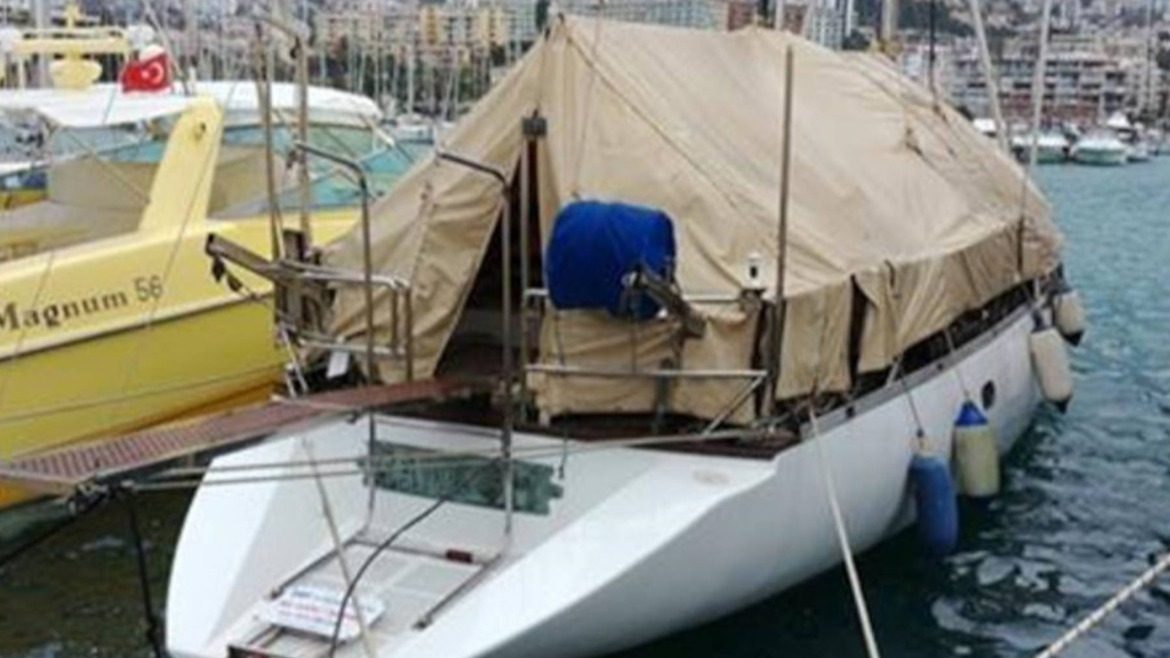
A winter yacht is designed for sailing not only in summer, but also in winter, early spring, and late autumn. A true winter yacht allows you to stay at sea when the usual holiday season is already over.
This does not mean ice fields or polar routes. A winter yacht is about extending the sailing season in regions where weather becomes rougher, colder, and less predictable.
Why a winter yacht is needed
The term winter yacht is not a formal classification. It is a practical concept that reflects a real problem: most yachts are simply not comfortable or safe enough for winter sailing.
In regions such as the Mediterranean, winter brings storms, rain, and unstable winds. On most boats, these conditions mean staying in a marina until spring.
Personal offshore experience, including winter sailing in the UK in January, leads to a clear conclusion: yachts are generally stronger than people. A keel sailing yacht can handle 8 Beaufort winds without capsizing, although course stability becomes demanding.
The real limitation is not the hull, but the crew. Seasickness, cold, and fatigue quickly reduce effectiveness. In harsh conditions, only well-prepared sailors can keep watch reliably.
Cold is the second major challenge. No sailing gear fully protects against icy spray. Gloves soak through, clothing gets wet, and steering becomes exhausting when one hand is frozen and the other barely warms inside a jacket.
What makes a proper winter yacht
Since the challenges are wind and cold, a winter yacht must address both.
From a structural perspective, a heavier yacht performs better in rough winter seas. A steel winter yacht, for example, moves more steadily and reduces sharp motion, much like a fiberglass yacht does in summer conditions.
Motor yachts are excluded almost immediately. In heavy winter seas, they are far more vulnerable than keel sailing yachts.
Cold protection is the decisive factor. A true winter yacht must have an enclosed wheelhouse. Yes, this reduces sailing performance. Windward ability is lower, speed decreases, and the superstructure adds wind resistance.
However, the benefit is decisive: steering from a warm, protected space extends the sailing season by months, and in some climates, allows year-round operation.
A winter yacht with a wheelhouse may tack poorly compared to light racing yachts. But experienced sailors know how rarely long upwind passages are actually chosen. In reality, most crews will start the engine when conditions demand it.
Ganesh as a winter yacht
Ganesh can rightly be described as a winter yacht. The design was chosen deliberately based on real offshore experience rather than theoretical performance.
The combination of a heavy displacement, enclosed steering position, and full onboard systems makes Ganesh suitable for cold-season sailing when most yachts remain tied to the dock.
As a result, winter sailing routes and programs are being added. A winter yacht opens a different sea: quieter, more demanding, but also more authentic.

