
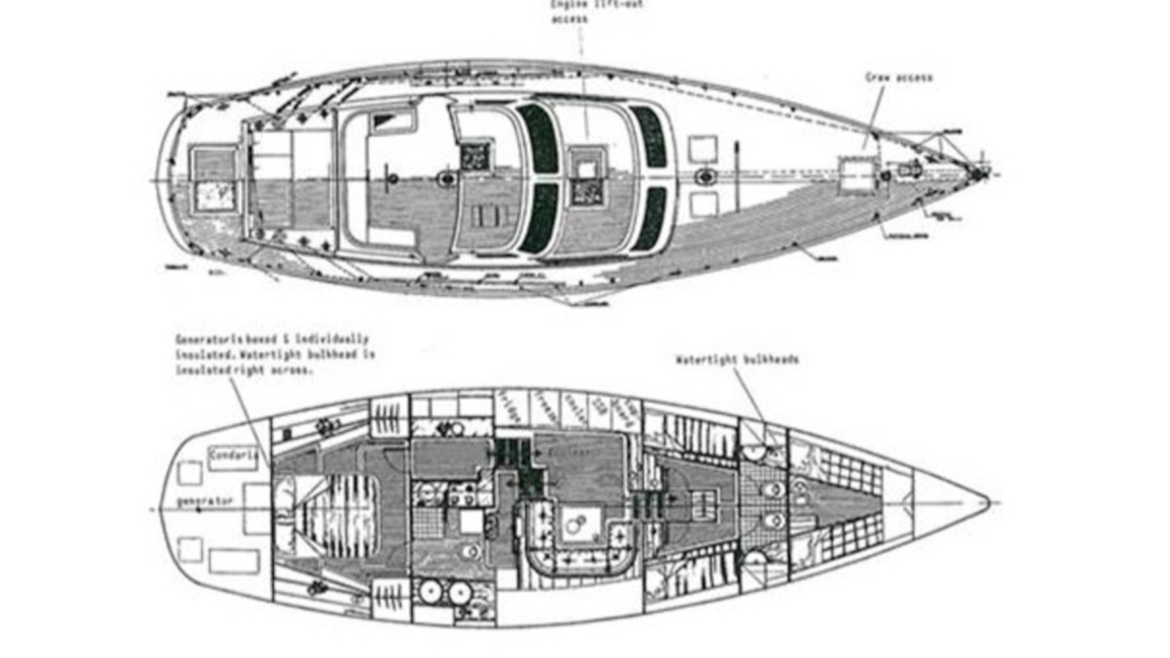
A yacht layout can vary greatly. Everyone has their own vision of what a dream yacht should look like, so this article reflects a subjective opinion—one based on practical experience.
When choosing a yacht layout, the first question should always be how the yacht will be used. From this decision comes the main compromise: more cabins or more open space. Unfortunately, both rarely exist together.
If the yacht is intended for charter, the yacht layout usually prioritizes the maximum number of cabins. This is especially common when berths are sold individually. However, living on such a yacht is far from comfortable, and it is rarely suitable for long voyages.
Key aspects of yacht layout
Once the number of cabins is defined, details matter. One of the most important questions is the position of the master cabin. In a traditional yacht layout, it is located aft. Placing the master cabin in the bow, as many modern designs do, is a questionable trend.
The reason is simple: the bow experiences the most motion at sea. Living there is less comfortable, especially on passages. From a classic perspective, the skipper’s place is aft—and for good reason. The skipper spends more time on board than anyone else.
Another important issue is how functional the master cabin really is. On some yachts, such as Ganesh, the master cabin offers full standing height, including above the double berth. On many production fiberglass yachts, the cockpit floor sits directly above the bed, severely limiting headroom.
The salon yacht layout also deserves careful attention. In summer, most time is spent on deck. But as soon as the weather turns colder or rainy, interior space becomes essential.
In many layouts, the companionway leads directly into the galley. While this may be practical for serving food to the cockpit, it is far from ideal for year-round use. A navigation table near the entrance feels more natural, while the galley works better slightly separated from the main passage.
An ideal yacht layout would also include an interior helm station, allowing the yacht to be operated from inside during cold or wet weather. Unfortunately, such solutions are still rare.
Some modern designs include both a dining table and a small coffee table in the salon. In limited space, this raises questions. Two tables are rarely necessary and often reduce usability.
Yacht layout on deck
After evaluating the interior yacht layout, attention must be paid to the cockpit. Movement on deck should be free and unobstructed. It is extremely inconvenient when the wheel blocks access to the stern.
This is particularly important in the Mediterranean, where stern-to mooring is standard practice. If access past the helm is restricted, boarding and disembarking become awkward and uncomfortable.
Many of these considerations are obvious, yet often ignored. Height, personal habits, and sailing region all matter. Yacht layout is always a balance between design trends and real-life use.
If you have your own views on yacht layout, feel free to share them—different perspectives are always valuable.

